
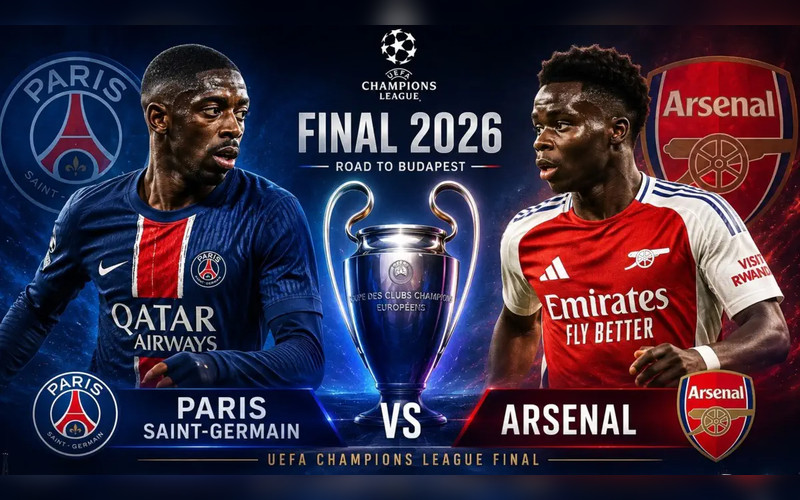
Arsenal vs PSG: Champions League Final 2026
From the opening whistle, Arsenal’s approach was clear: compress space centrally, slow PSG’s rhythm, and strike in transition. Mikel Arteta’s side executed this with near perfection in the first half, limiting PSG’s high-tempo attacking structure and forcing them into wide, low-probability crossing zones. The early goal from Havertz was not accidental—it came from a well-rehearsed transition sequence designed to exploit PSG’s advanced full-backs. Arsenal’s defensive block remained compact, with Declan Rice anchoring midfield and Gabriel and Saliba winning key duels. For more than 60 minutes, PSG looked unusually sterile in possession, struggling to convert territorial dominance into clear chances.
The tactical balance shifted after the hour mark when PSG increased verticality in their passing structure. Luis Enrique adjusted by pushing Vitinha higher between the lines, effectively creating a 2-3-5 attacking shape in possession. This forced Arsenal’s midfield line to retreat deeper, breaking their compactness and opening half-spaces between the lines. Kvaratskhelia’s role became central in this phase—he began drifting inward rather than staying wide, dragging Arsenal’s right-side defensive attention and destabilising their shape. The penalty that led to PSG’s equaliser originated from sustained pressure in these zones, where Arsenal were eventually forced into a late challenge inside the box.
Ousmane Dembélé’s equaliser from the penalty spot altered the psychological structure of the match more than its tactical one. Arsenal, who had been operating with controlled defensive discipline, were forced to abandon their low-risk approach and engage more actively in possession. This created the kind of open transitional game PSG thrive in. As space expanded, PSG’s attacking players—particularly Kvaratskhelia and Dembélé—began to isolate defenders in one-on-one situations. Arsenal still retained structural discipline, but their earlier control of tempo had evaporated, replaced by end-to-end volatility that suited PSG’s profile more than their own.
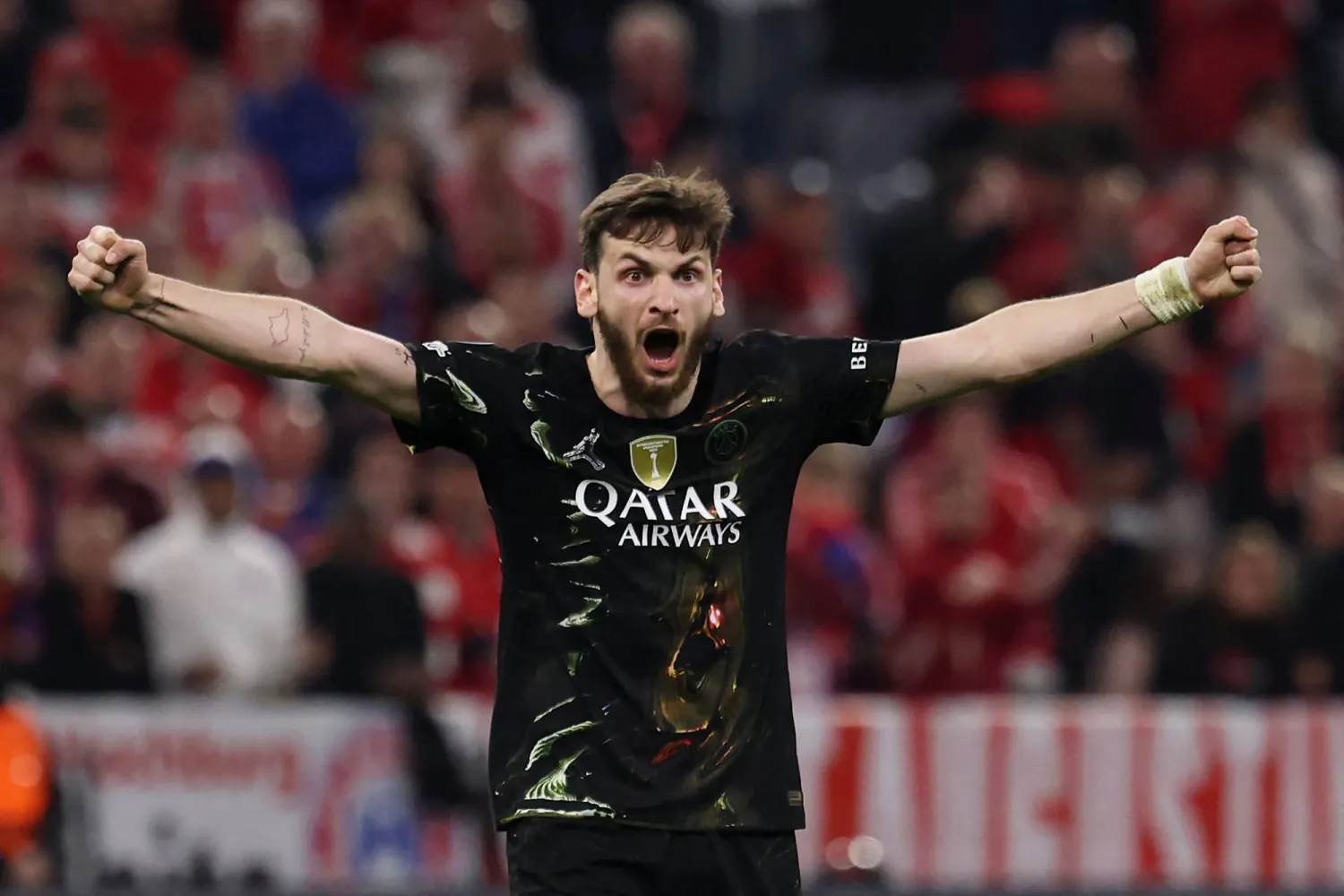
Kvaratskhelia’s influence during this phase cannot be reduced to statistics alone. While he did not score in the final, his manipulation of defensive spacing was decisive. Arsenal repeatedly doubled up on him, which in turn freed Vitinha and Dembélé to operate in advanced pockets. This is a classic modern elite-winger effect: even when not directly involved in goals, the player alters opposition defensive geometry. His willingness to carry the ball under pressure forced Arsenal’s back line into reactive movement, rather than proactive positioning. That shift was subtle but critical in determining PSG’s growing territorial control in the second half.
As extra time unfolded, fatigue became a structural factor. Arsenal’s press lost synchronisation, particularly in midfield, where the distance between Rice and the forward line increased. PSG exploited this by circulating possession more patiently, waiting for isolation moments rather than forcing attacks. Arsenal, meanwhile, attempted to regain control through substitutions, but the intensity gap had already shifted. The match increasingly resembled a test of emotional resilience rather than tactical discipline, with both sides aware that one mistake would decide the final.
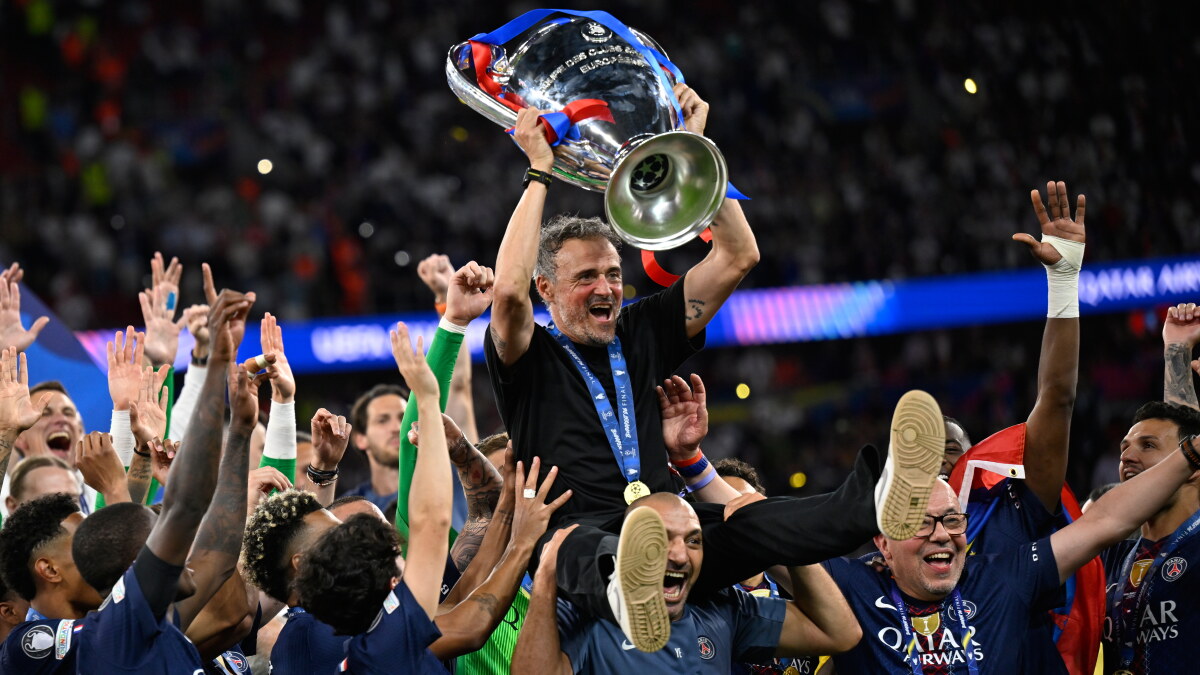
The penalty shootout reflected the broader psychological contrast between the two teams. PSG entered the shootout with a recent history of success in high-pressure scenarios under Luis Enrique, and that confidence was visible in their execution. Arsenal, by contrast, appeared increasingly burdened by the weight of the occasion. Misses from key takers proved decisive, and PSG converted with clinical precision. The final kick sealed a 4–3 victory, confirming their second consecutive Champions League title and reinforcing their status as Europe’s dominant knockout team in recent seasons.
From a broader analytical perspective, this final exposed a recurring modern Champions League pattern: teams can out-structure PSG for long periods, but sustaining that control across 90–120 minutes is extremely difficult. Arsenal’s system was tactically sound and arguably superior for large stretches, but PSG’s depth of talent and ability to alter attacking structure mid-game ultimately shifted the balance. Luis Enrique’s side did not win because they dominated the match; they won because they adapted to it faster once control was lost. That adaptability is a hallmark of elite European champions.
Kvaratskhelia’s role in this dynamic is central to understanding PSG’s evolution. He represents a modern winger archetype that goes beyond traditional metrics of goals and assists. His value lies in destabilisation—forcing defensive collapse through repeated engagement rather than isolated moments. In elite knockout football, that trait is often more decisive than finishing alone. Even in a final where others scored the decisive penalties, his influence shaped the conditions under which those moments became possible.
For Arsenal, the defeat will be analysed through a lens of marginal inefficiency rather than structural failure. Their system worked, their defensive discipline held for long stretches, and their transition plan produced the opening goal. However, the inability to maintain attacking threat after the equaliser proved decisive. Once PSG adjusted their structure, Arsenal struggled to re-establish control in possession phases. The gap at this level is not large, but it is unforgiving—small tactical shifts at elite level often determine entire seasons.
For PSG, the implications are far more expansive. Back-to-back Champions League titles place them in a rare historical category and suggest the emergence of a genuine European cycle rather than a one-off triumph. The combination of tactical flexibility, attacking unpredictability, and psychological resilience in high-pressure scenarios defines modern elite dominance. Kvaratskhelia, Dembélé, Vitinha, and Enrique’s system form a cohesive unit that adapts across different match states rather than relying on a single identity.
Ultimately, this final will be remembered less for the scoreline and more for the contrast in how it was decided. Arsenal built control; PSG built resilience. Arsenal imposed structure; PSG imposed adaptation. And in modern Champions League football, adaptability under pressure remains the ultimate currency. That is what decided the night in Budapest, and that is what continues to separate champions from challengers in Europe’s most demanding competition.
Related News
Comments (1)
Thats so great