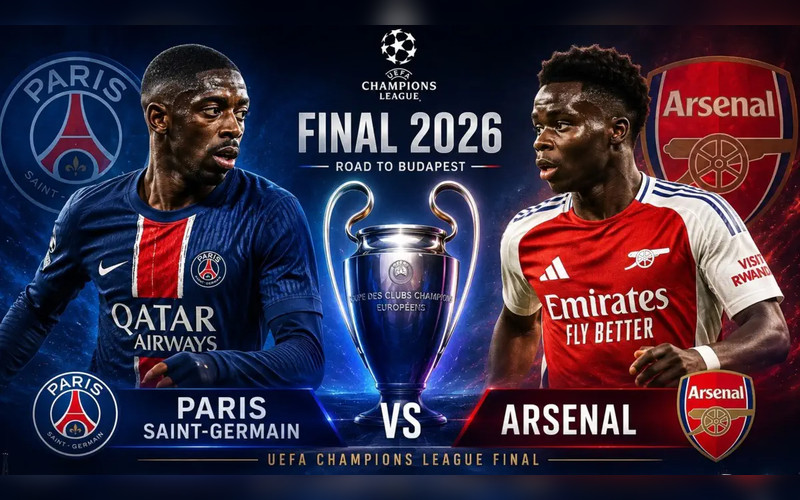
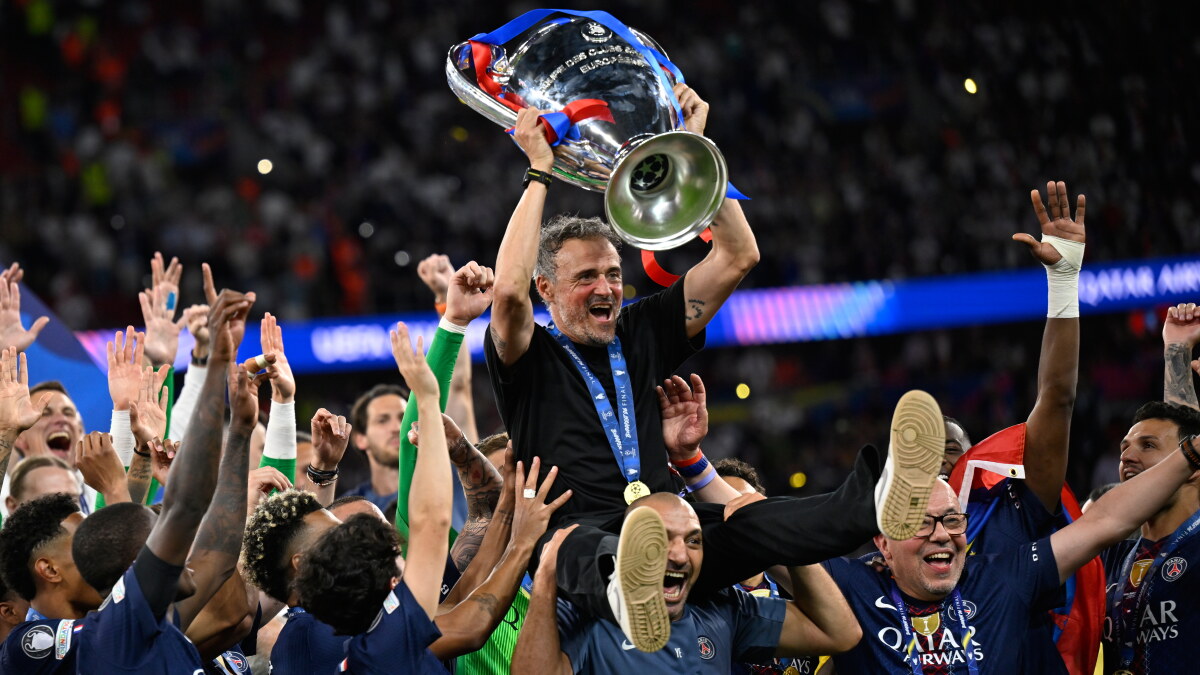
PSG Crown Back-to-Back Champions League Titles After Arsenal Final Thriller
The final itself was a tactical battle defined by contrasting styles. Arsenal began with discipline and structure, focusing on compact defensive spacing and controlled transitions. Their early strategy worked to perfection when they struck first through Kai Havertz, punishing PSG during a phase where the French side struggled to break Arsenal’s midfield press. Mikel Arteta’s side appeared composed, limiting PSG’s attacking rhythm and forcing them into predictable wide play. For long stretches of the first half, Arsenal looked more organized and tactically stable than their opponents, frustrating PSG’s attacking stars and disrupting their usual tempo.
PSG’s response, however, highlighted why they are now considered Europe’s most adaptable elite side. Luis Enrique adjusted his structure by increasing midfield progression through Vitinha and allowing his full-backs to push higher into attacking zones. This shift created numerical superiority in central areas and slowly began to break Arsenal’s defensive compactness. PSG’s attacking pressure increased steadily, forcing Arsenal deeper and reducing their ability to transition out of defense. The equaliser came after sustained pressure inside the box, where Arsenal were eventually forced into a foul, allowing Ousmane Dembélé to convert from the penalty spot.
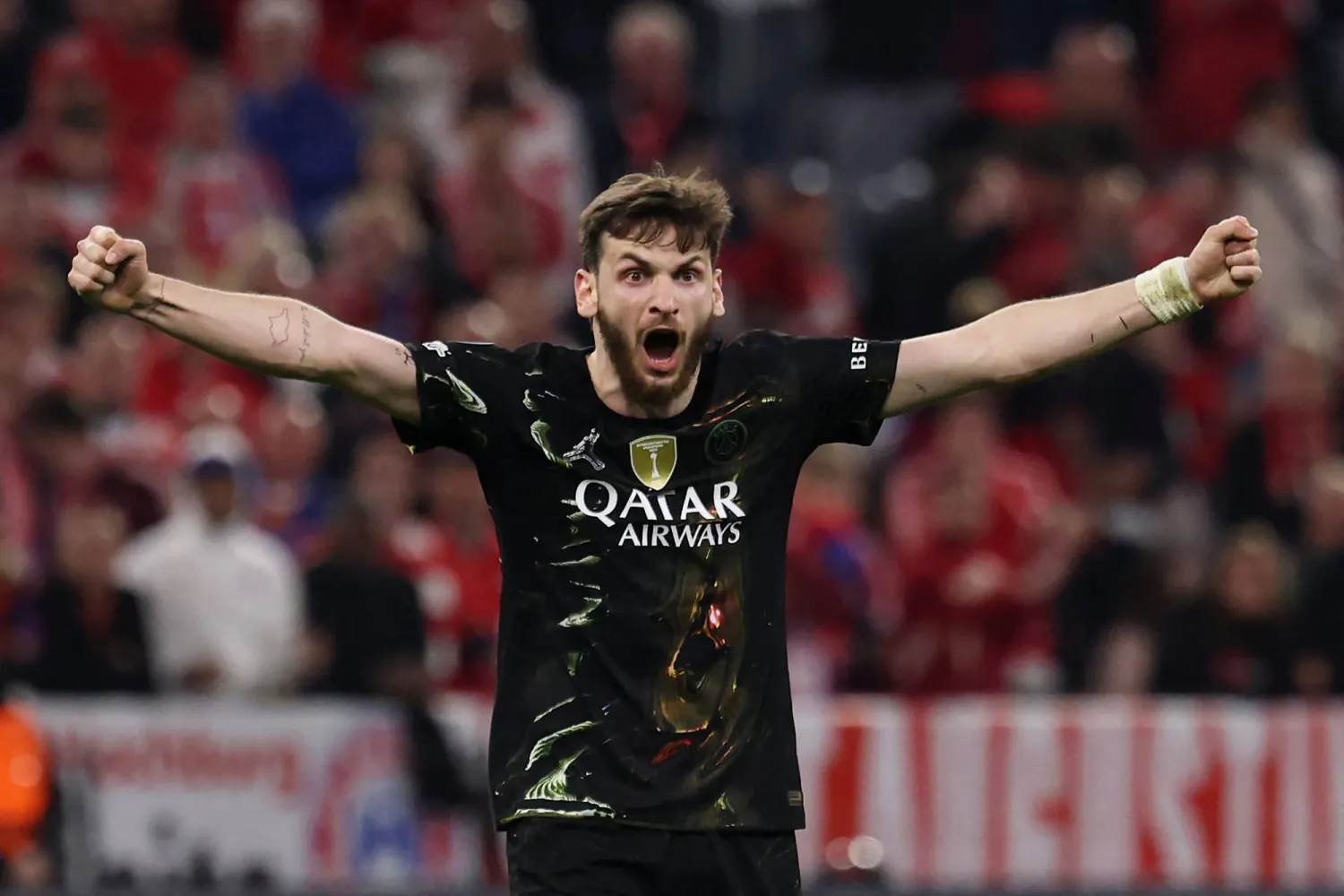
Once the match was level, the tactical balance shifted dramatically. Arsenal, who had built their first-half success on control and discipline, were forced to chase the game more aggressively. This change played directly into PSG’s strengths. With more space available, PSG’s attacking players began to isolate Arsenal defenders in one-on-one situations, particularly Khvicha Kvaratskhelia and Dembélé. The game opened up into a transitional contest, with both teams exchanging attacking phases but PSG increasingly looking more dangerous in wide and half-space areas.
From an analytical perspective, PSG’s dominance in this final was not based on sustained control, but on structural adaptation. Arsenal arguably executed their game plan more precisely for longer periods of the match, yet PSG demonstrated the critical Champions League trait of adjusting to adversity. Luis Enrique’s ability to shift from positional control to vertical attacking patterns allowed PSG to remain competitive even when their initial structure was neutralised. This flexibility is now a defining feature of their European success.
Arsenal’s performance will be remembered as both impressive and incomplete. Their defensive organisation and midfield discipline effectively disrupted PSG’s rhythm for over an hour, and their opening goal validated their tactical approach. However, their inability to maintain attacking threat after conceding proved decisive. Once PSG increased tempo and central penetration, Arsenal struggled to regain control of possession. Their transitions became less frequent, and their defensive block was forced deeper and deeper as the match progressed.
The psychological dimension of the final became increasingly important as the match entered extra time. Fatigue affected both teams, but PSG’s experience in high-pressure European knockout scenarios gave them a marginal advantage. Their decision-making in possession became more measured, prioritising control and territory over risk. Arsenal, by contrast, showed signs of tension in key moments, particularly when attempting to rebuild attacks under pressure. This shift in emotional balance contributed heavily to the eventual outcome.
The penalty shootout ultimately reflected the fine margins between success and failure at the highest level of European football. PSG’s takers displayed composure and technical clarity under extreme pressure, converting their chances with precision. Arsenal, despite strong individual performances across the match, faltered at crucial moments in the shootout. The decisive miss sealed PSG’s 4–3 victory and confirmed their place as back-to-back Champions League winners.
Historically, PSG’s achievement places them in a rare category of clubs capable of sustained European dominance. Back-to-back Champions League titles are extremely difficult in the modern era due to competitive balance, tactical evolution, and fixture intensity. PSG’s success reflects not only individual talent but also systemic cohesion under Luis Enrique. The team now represents a blend of elite attacking quality and tactical flexibility that few opponents have consistently managed to neutralise.
Kvaratskhelia’s influence, while not directly reflected in goals in the final, remained central to PSG’s attacking threat. His ability to stretch Arsenal’s defensive structure and draw multiple markers created space for teammates in decisive areas. Even in matches where he is not the final executor of chances, his presence significantly alters opposition defensive behaviour. This type of indirect influence has become one of PSG’s most important tactical weapons in knockout football.
For European football as a whole, PSG’s victory signals a shift in competitive hierarchy. Traditional dominance cycles are increasingly being challenged by tactically flexible, possession-adaptive teams built around multi-functional attacking systems. PSG’s current model, which combines technical midfield control with direct attacking transitions, reflects this evolution. Their success is not accidental—it is the product of sustained structural development and recruitment aligned with modern tactical demands.
Looking ahead, PSG now face the challenge of sustaining this level of performance. Back-to-back Champions League titles elevate expectations significantly, with every opponent now targeting them as the benchmark. Maintaining motivation, tactical freshness, and squad depth will be critical if they are to extend this dominance further. Arsenal, meanwhile, will regroup with a clear sense of what is required to compete at this level consistently, having come within reach of European glory.
In the end, this final will be remembered as a clash of structure versus adaptation. Arsenal controlled phases through discipline and organisation, but PSG’s ability to evolve during the match proved decisive. At the highest level of football, marginal adjustments define outcomes, and PSG executed those adjustments more effectively when it mattered most. That difference ultimately decided Europe’s biggest prize once again.